
Une lutte sans relâche
De nouveaux textes fondamentaux
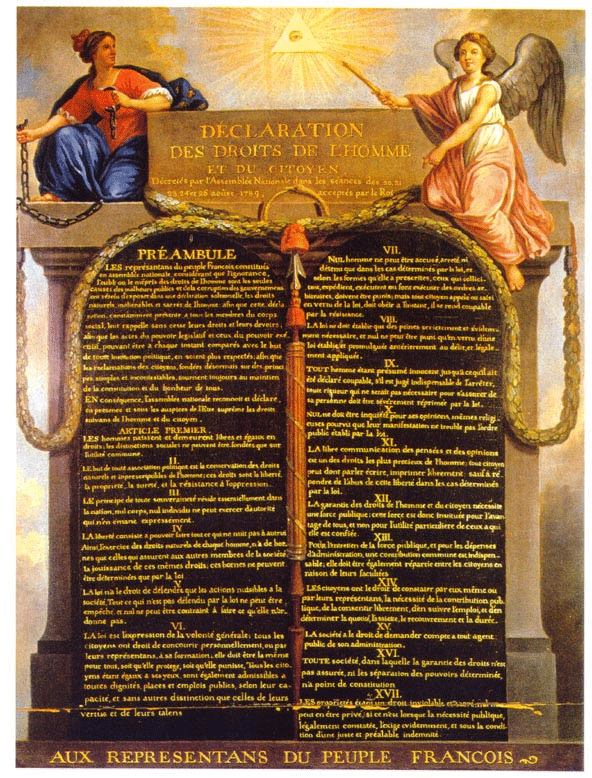
Le combat féminin en France, s'acharne à plus forte raison avec l'arrivée de nouveaux textes et écrits d'auteurs féminins défrayant la chronique. Afin d'apaiser les grands bouleversements politiques et sociaux autour de la Révolution française, l’État de Louis XVI décide de mettre en place un texte de loi dictant les droits individuels de chacun. La Déclaration des Droits de l'Homme et du Citoyen de 1789, est ainsi adoptée entre le 20 et le 26 août 1789, avec pour objectif d'affirmer les droits et libertés fondamentales de l'Homme, comme la liberté, la propriété, la sûreté ou la résistance à l'oppression. Le texte se compose d'un préambule, puis de 17 articles, combinant des mesures pour assurer à la fois l'équilibre du peuple et celui de la Nation. Seulement, dès le premier article dictant que « Les hommes naissent et demeurent libres et égaux en droits. » et « Les distinctions sociales ne peuvent être fondées que sur l'utilité commune. », le ton ressenti reste bien stricte sur ces valeurs ne s'adressant qu'au sexe masculin. La suite des articles ne diffère finalement pas, puis-qu’aucune fois, les femmes n'y sont mentionnées.
Olympe de Gouges
Consternée par cette injustice politique, la grande militante en faveur de l'équité masculine et féminine, Olympe de Gouges décida le 5 septembre 1791 de rédiger un texte de loi sous la même image, afin d'y revaloriser la condition féminine et ainsi, les exhorter à militer en faveur de leurs droits et libertés.

Selon l'article premier de la Déclaration des Droits de la Femme et de la Citoyenne d'Olympe de Gouge, « La femme naît libre et demeure égale à l'homme en droits. Les distinctions sociales ne peuvent être fondées que sur l'utilité commune. ». En comparaison avec l'article premier de la Déclaration des Droits de l'Homme et du Citoyen de 1789,dictant que « Les hommes naissent et demeurent libres et égaux en droits. » et que « Les distinctions sociales ne peuvent être fondées que sur l'utilité commune. », les similitudes de syntaxe ressortent d'une manière presque satirique.
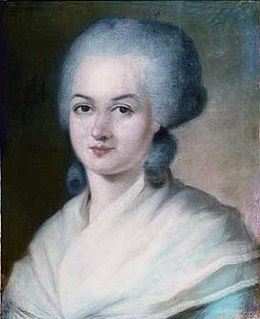
- Sous le modèle de l'article 2 de la Déclaration des Droits de l'Homme et du Citoyen de 1789, Olympe de Gouges ne modifie aucun aspect de cet article, si ce n'est l'inclusion des femmes dans celui-ci lorsqu'elle affirme : « Le but de toute association politique est la conservation des droits naturels et imprescriptibles de la femme ET de l'homme. Ces droits sont : la liberté, la prospérité, la sûreté et surtout la résistance à l'oppression. » Ainsi, Olympe de Gouges cherche à redonner justice à leurs libertés et leurs droits volés. A travers l'article 4, Olympe suggère que : « La liberté et la justice consistent à rendre tout ce qui appartient à autrui ; ainsi l'exercice des droits naturels de la femme n'a de bornes que la tyrannie perpétuelle que l'homme lui oppose ; ces bornes doivent être réformées par les lois de la nature et de la raison. ». Le mauvais traitement des femmes à l'égard des hommes est vivement dénoncé. Olympe repousse cette « tyrannie perpétuelle que l'homme lui oppose » en suggérant une réforme de ces « bornes » imposées par l’homme, et qu'elle soient réformées par « les lois de la nature et de la raison ». Elle ajoute avec l'article 10, que « Nul ne doit être inquiété pour ses opinions même fondamentales ; la femme a le droit de monter sur l'échafaud, elle doit également avoir celui de monter à la tribune, pourvu que ses manifestations ne troublent pas l'ordre public établi par la loi. ». Une femme peut donc être condamnée à a même échelle qu'un homme tant qu'elle peut également exercer dans la politique. La notion d'égalité s'affermit. Finalement, avec l'article 17, Olympe de Gouges conclue que « Les propriétés sont à tous les sexes réunis ou séparés : elles sont pour chacun un droit inviolable et sacré ; nul ne peut être privé comme vrai patrimoine de la nature, si ce n'est lorsque la nécessité publique, légalement constatée, l'exige évidemment et sous la condition d'une juste et préalable indemnité. ». La notion de propriété jusqu'alors uniquement propre à l'homme regroupe dans cet article « tous les sexes réunis ou séparés ». Cette article conclue sur l'enchaînement de lois militant en faveur de l'égalité globale, et dans tous les domaines, entre les hommes et les femmes.
Mary Wollstonecraft
Toutefois, le combat pour l'égalité politique et sociale des deux sexes n'eut pas lieu uniquement en France mais également dans le monde entier.
In the United-Kingdom, the feminist's fight
succeeded in underpinning its position and development through the country with
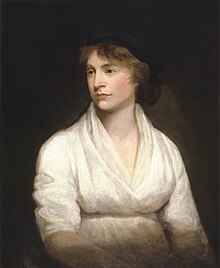
the emergence of different fundamental texts and trailblazing personalities. Mary Wollstonecraft under the name of Mary
Wollstonecraft Godwin after mariage was born in April 27th 1759 in Spitalfields
and died on September 10th 1797 in London from a septicemia not long after
giving birth to her daughter caring the same name as her, Mary Wollstonecraft.
Her daughter Mary, named Mary Shelley after marriage, followed the writing
premises of her mother by being the future writer of Frankenstein, a real masterpiece of English literature.
Mary Wollstonecraft was a famous writer and lawyer
in the 18th Century as long as an activist of equity in women's education and
rights. She was an important philosopher and women of letter and one of the
main feminine character of the emerging feminist movement. Mary wasn't part of
the upper classes, as her life didn't start in the same illustrious ways as the
famous authors and writers who usually grew up into wealthy and powerful
families. She was indeed brought up by an abusive father who worked as a farmer
and spent most of his somewhat substantial wealth on a series of unsuccessful
investments in farming. Her life was blown apart by her mother's death in 1780, which
convinced her to leave her father and to set out to earn her own lifehood/living
by herself.
Four years after, Mary established with her sister and best friend as a teacher in Newington Green elemantary schlool. But her carreer didn't lead into a lasting and stable situation and went to dust after her friend's death in 1785. This tradgedy conducted her to take a position as a tributary governess of the Kingsborough family in Ireland. Her short pamphlet Thoughts on the Education of Daughters, published in 1787, was inspired from her working experiences in the field of education. This short essay provides advices on women's education in the emerging British middle-class. Although dominated/ prevailed by questions of morality and manners, the text also contains basic instructions for the education of children, such as infant care.
A Vindication of the Rights of Women
After working as Journalist and adviser to Joseph Johnson in London, Mary finally published her most famous work, A Vindication of the Rights of Woman in 1792, a revolutionnary work of emerging feminism.
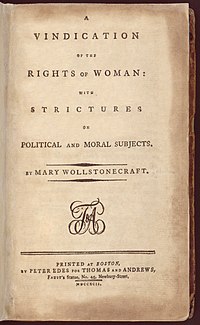
. In her essay, Mary discredited the conventional educational system of her time which purposedly condemned women to be frivolous and incapable human-beings. She claimed that an equal educational system for girls and boys would result in better brides and mothers capable of better actions and with better prospects. Charles Maurice de Talleyrand-Périgord's 1791 report to the French National Assembly motivated Mary to write her essay as she refused his preconsumed idea in which women should only receive a domestic education. Mary Wollstonecraft claims that women are as human beings as men and are entitled to the same fundamental rights as them. In spite of her will to change people of her time's mind and even if she was a pioneer of early feminism, Mary's Vindication of the Rights of Woman failed to bring instantaneous reforms. Her trailblazing work brought noticeable debate and constroversy into the finest literary parlour due to her asperity towards such a prohibed subject. Despite her lack of success, her work will be restated and rehashed several years later, when the Great feminist movements of the 19th and 20th centuries appeared.
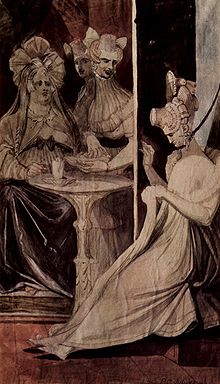
- This work is a Watercolour and graphite on paper painted in 1807 by the Swiss painter and draughtsman Henry Fuseli ( 1741-1825 ). This work is one of his plentiful collection of drawing in which he is seeking through his fantasy of dominant women. Even though the actual subject of the drawing is not known it can be interpreted. The position of the women in backgrounds is mysterious but they are probably high class prostitutes, or courtesans with higher fonction in the society than the usual women. The woman in the foreground is sitting and seems to be tethered by the neck on the wall with a leash like a vulgar domestic animal. She appears to be sewing desperately while being stared with amusement by the upper-classes women. The large woman in the left could possibly be the person in charge of the brothel judging by her fancy look and by her stoutness, sign of wealth and power. leash and submission show that Women, are victims of male social conventions advocating the legitime women's place in the domestic work. The drawing echoes Mary Wollstonecraft's views in The Vindication of the Rights of Women.